Designing Cinematic Focus Vol.6: Rainy Morning Deep Work
How I turned a rainy-mountain concept into a one-hour deep-work session without letting the music or visuals become the distraction.
Why I wanted a rainy-morning focus session
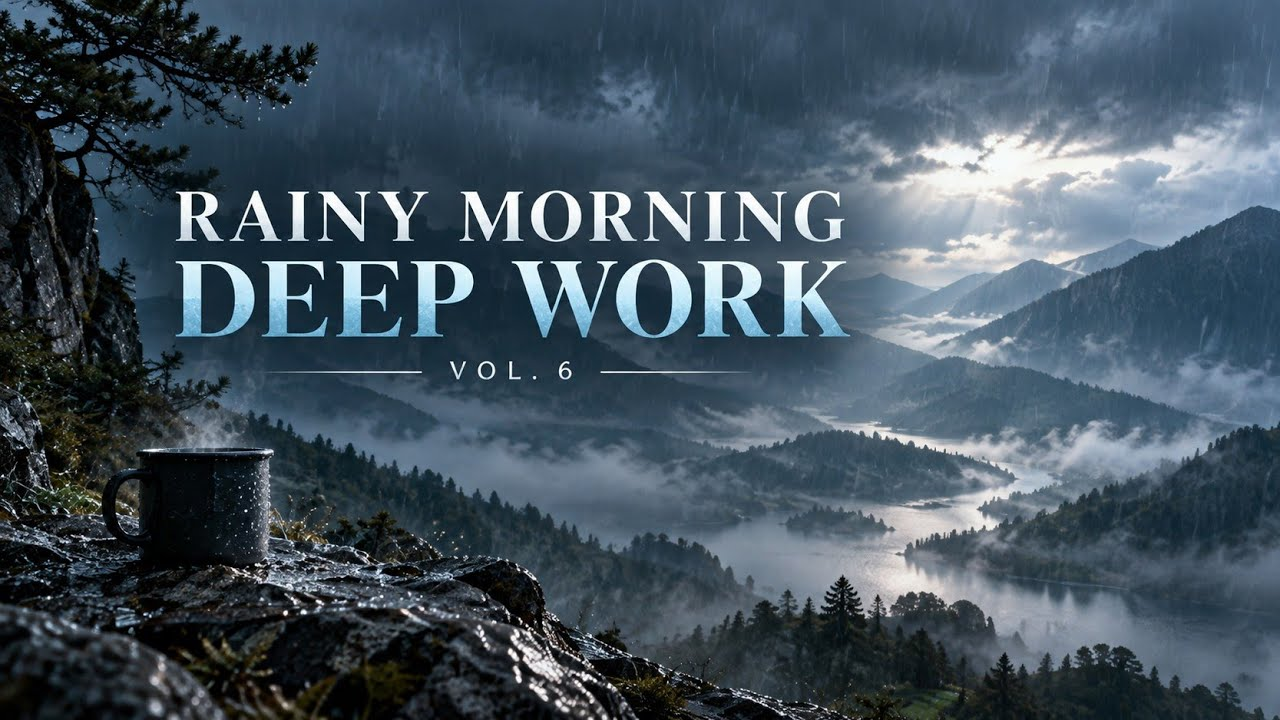
The Cinematic Focus series is built around a simple idea: focus music should support the work rather than constantly ask for attention. For Vol.6, I wanted the atmosphere to feel like a rainy mountain morning—calm, slightly dramatic and visually alive without becoming distracting.
My music work developed alongside the technical projects after I left corporate life and began learning newer AI creative tools on my own. The series became a way to combine music generation, sequencing, visual production and publishing into one repeatable workflow.
Building one hour from shorter material
A one-hour video is not just a short track repeated twelve times. I wanted enough movement in the session to stop it feeling mechanical while keeping the overall tone stable. The final structure moved through rain, morning light, cloud, valley and lake imagery, then returned to earlier motifs.
The published chapter flow included sections such as Rainy Morning — Into the Storm, Morning Light — Through the Clouds, Above the Storm — Deep Atmosphere, Deep in the Valley — Focus Flow, Rain Returns — Quiet Momentum, Morning Light Reprise, Mountain Lake — After the Rain and After the Storm — Distant Light.
Restraint matters more than spectacle
For this series I deliberately avoid aggressive EDM energy, heavy drum dominance and vocal elements that would pull attention away from work. The visual side follows the same rule. Motion should be present, but the scene should not behave like a music video that demands constant watching.
That balance is difficult because cinematic visuals naturally encourage movement. The more dramatic the camera, lighting or weather becomes, the easier it is to turn focus content into entertainment content.
Sequencing and repetition
I use repetition intentionally, but not invisibly. Some sections return later in the hour because familiarity can support concentration. Reprises also help the video feel structured instead of randomly assembled.
The challenge is deciding when repetition feels calming and when it starts feeling like a production shortcut. That is why chapter order, transition length and the visual environment matter as much as the individual track.
What quality control changed
During later Cinematic Focus production, I started reviewing transitions, title readability, scene continuity and audio endings more deliberately. Small issues such as dissolves overlapping road geometry or an ending that does not fade fully to silence can weaken an otherwise finished video.
That changed my definition of "done." The creative generation stage is only one part of the work; publishing readiness needs its own review.
What I learned from Vol.6
The strongest focus sessions are not the ones with the most variation. They are the ones where the variation is controlled. Rain, cloud, morning light and distant landscape can create progression without forcing the listener to notice every transition.
That lesson now influences later volumes: I pay more attention to continuity, lower-intensity visual motion and endings that feel deliberate.